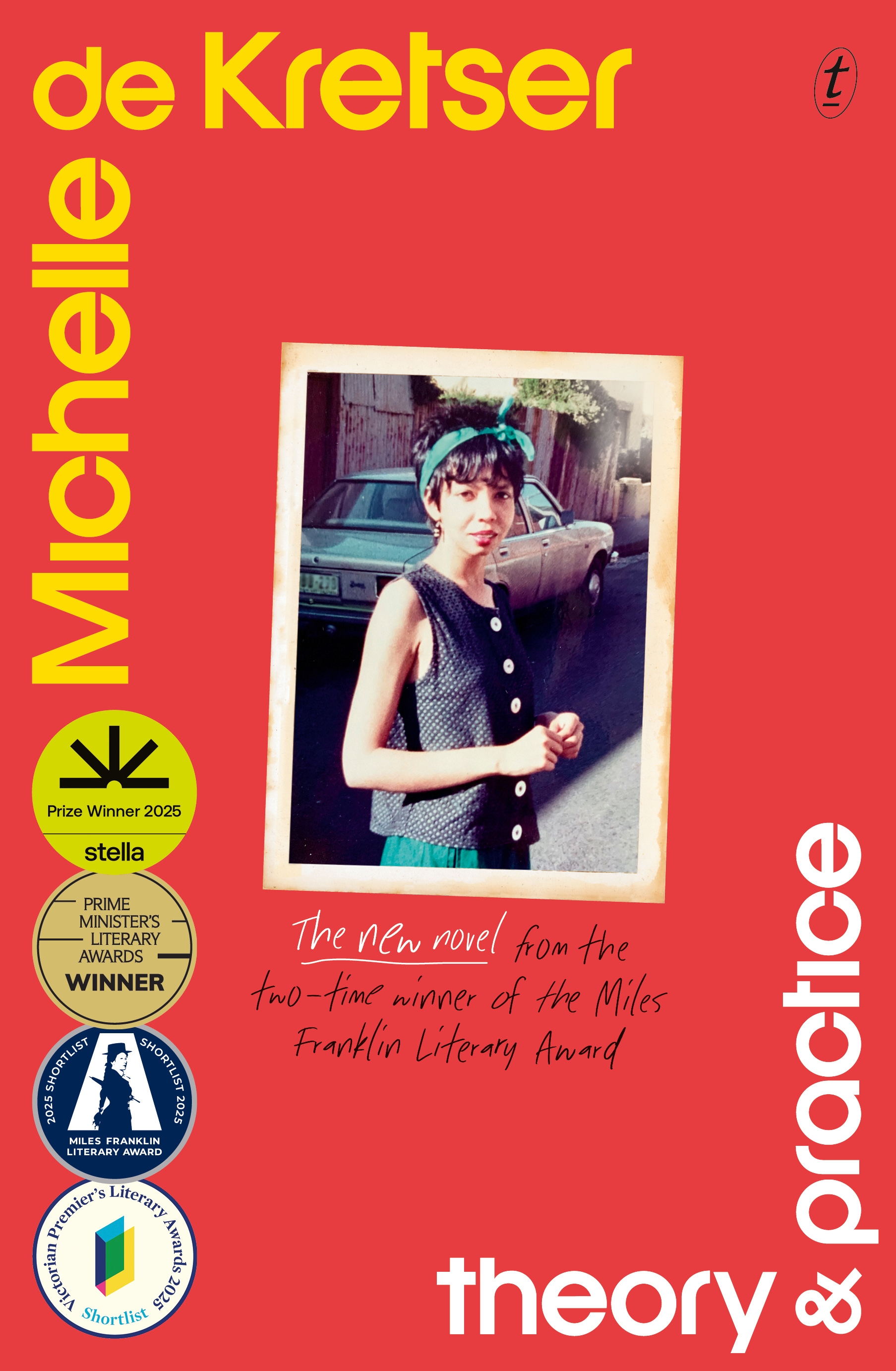
Theory & Practice
Winner of the 2025 Stella Prize


Barbara Jefferis Award
Shortlisted • 2026 • Barbara Jefferis Award
RSL Ondaatje Prize
Longlisted • 2026 • Royal Society of Literature Ondaatje Prize
South Australian Literary Awards
Shortlisted • 2026 • Fiction Award
Prime Minister's Literary Awards
Winner • 2025 • Fiction
Stella Prize
Winner • 2025 • Stella Prize
BookPeople Book of the Year Awards
Shortlisted • 2025 • Adult Fiction Book of the Year
Mark & Evette Moran Nib Literary Award
Longlisted • 2025 • Mark and Evette Moran Nib Literary Award
Miles Franklin Literary Award
Shortlisted • 2025 • Miles Franklin Literary Award
Victorian Premier's Literary Awards
Shortlisted • 2025 • Fiction
Voss Literary Prize
Shortlisted • 2025 • Voss Literary Prize
‘Perfect for a summer read, but also with a timeless appeal.’
Good Weekend
‘Startlingly intelligent and stylish.’
Jasmine Vojdani, New York Magazine
‘Utterly absorbing.’
Felicity Plunkett, Saturday Paper
‘Theory & Practice blazes with intelligence, passion and wit. I devoured it, greedily, in a single glorious sitting.’
Sarah Waters
‘Michelle de Kretser, one of the best writers in the English language, has written her most brilliant book yet. It is, in short, a masterpiece.’
Neel Mukherjee
‘A brilliant account of what it means to be a feminist and wrestling with universal emotions that cannot be denied. It’s a slim book, something you can finish in one glorious and insightful sitting.’
Women’s Agenda
‘A thought-provoking narrative on desire, shame and moral complexities.’
Harper’s Bazaar
‘Sharp-witted and mesmerising…The narrator’s clever political insights and beautiful depictions of art and literature offer readers a view into a captivating mind. De Kretser is at the top of her game.’
Publishers Weekly
‘A really delightful and clever and thoughtful book.’
David Gaunt, ABC Sydney
‘De Kretser perceptively evokes how maternal figures, both birthright and adoptive, maintain a hold on us, despite our attempts to distance ourselves…A form-melding book contending with colonialism, the disharmony that can arise between our purported ideals and how we live, the depths of jealousy and shame, and motherhood and the maternal figures who shape us…An inquiry into what fiction can look like and what it can achieve.’
Jack Callil, Guardian

Michelle de Kretser’s Theory & Practice has been shortlisted for the 2026 Barbara Jefferis Award!