The secret business of writing about puberty
It was a piece of cake to have the puberty talk with my first-born. She started it, finished it and handled the middle bit, and I just chimed in when there was something I felt obliged to correct. It was like attending a lecture, with sources including Kaz Cooke’s Girl Stuff, playground consultations with her peers, snippets she’d overheard on a breeze, and a selection of children’s literature. Job done. Next?
Next was my second-born, a whole different kettle of ballparks. This was a boy who’d banned us from singing Happy Birthday because he hated the spotlight, and who usually took such a long time to confide what was troubling him that it was too late to help. He found it easy to make friends in his peer group but otherwise preferred animals to humans. The last child in the world who wanted to talk about himself.
When I realised that he was experiencing the first subtle changes of puberty, the idea of him going through it alone broke my heart. Naturally, I thought of books as a way to reach him. Towards the end of primary school, he was an avid reader. As a children’s novelist, deep in the psychic space of my own youth, my stories for the most part centre female experience. I’m not apologising for that but I felt less qualified when it came to finding novels I might casually leave around the place for him to find.
The world knows about Are You There God? It’s Me Margaret by Judy Blume in part because its largely female readership understands there is power in being open with each other. Blume’s equivalent story about a boy, Then Again, Maybe I Won’t, is comparatively obscure. When I tried to think of an Australian version, Tim Winton’s Lockie Leonard came to mind, published in 1990 but still a go-to on many school library shelves. From my bookseller days I knew of Spurt by Chris Miles – a comedic novel about a boy so late to puberty that he takes matters into his own hands, memorably with a merkin.
But my son was no longer interested in realism in fiction, even when it promised to be funny. His jam was anything with a dragon, dinosaur, mythical beast, or a world centring on the lives of feral cats. The simpler option was non-fiction. I knew he’d revolt at a title comprised of horrifying words like body, puberty or changes. By-passing a range of options, I bought Secret Boys’ Business – a slim, non-threatening booklet showing a cheerful illustration of a skateboarder. A postcard compared to Girl Stuff, which is a weapon of a book in more ways than one.
My approach with Secret Boys’ Business went like this: after knocking, I cautiously entered my son’s room. He spotted the cheerful skateboarder. I received one of his darkest looks, calmly lowered the book to the ground and backed away.
Fast-forward to the present day. My son is nineteen and I’ve spent those years trying to write the kind of novel he might have loved back then. It’s not about his life but I couldn’t have written it without having been his parent.
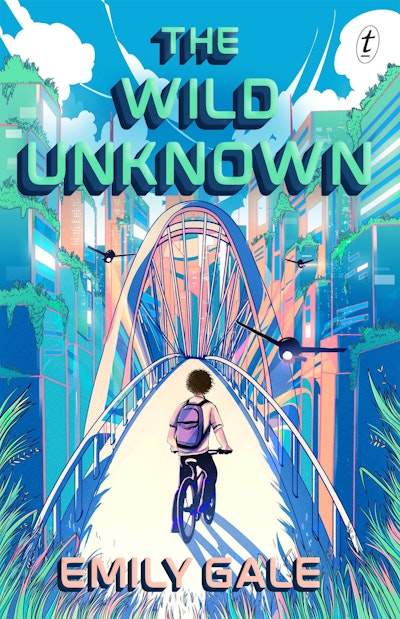
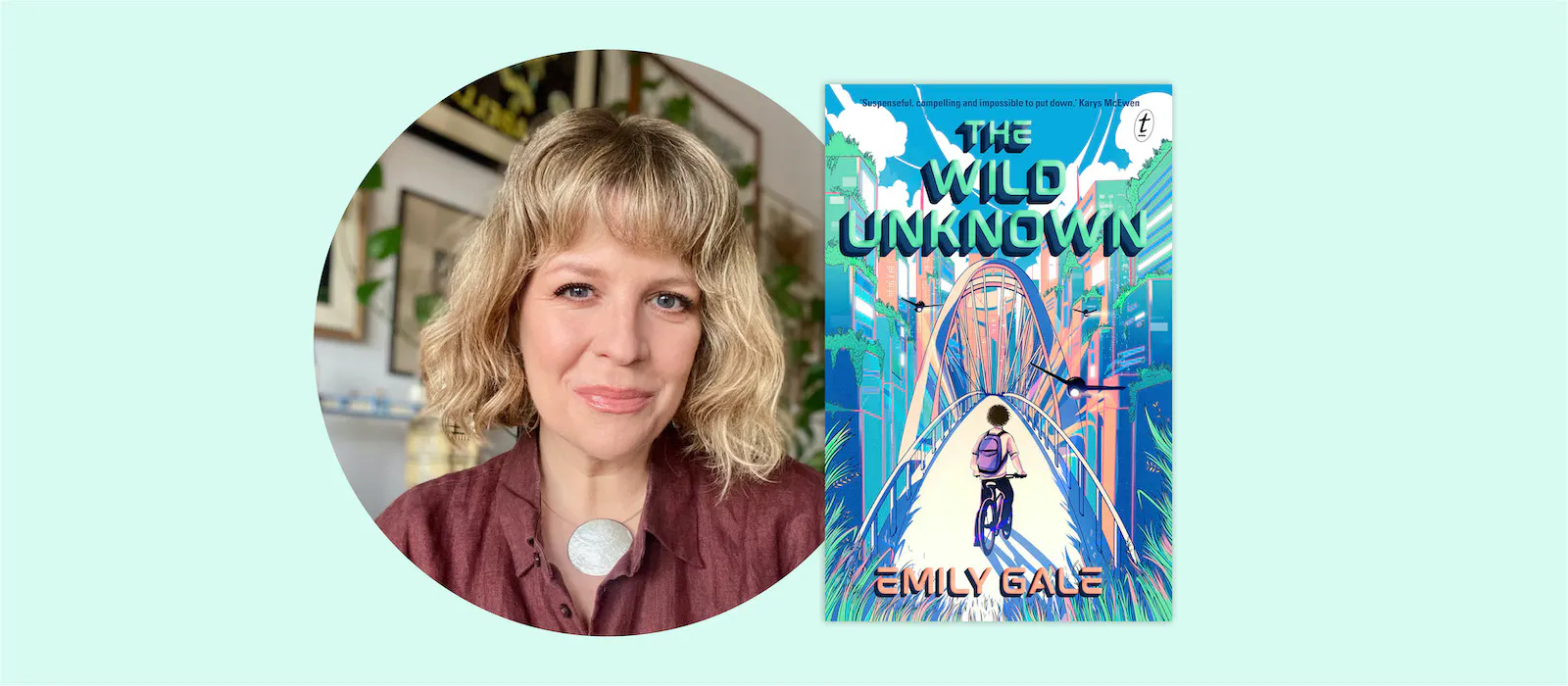
In The Wild Unknown, Eddie has a loving family and a group of friends who band together to solve a missing-person case. It’s set in 2045 – far enough into the future that my imagination could run riot and close enough that it relates to current experience. But Eddie goes through physical changes that are wholly unexpected, and non-human.
Instead of a breaking voice, out of Eddie’s mouth comes toxic burping with alarming consequences. He can’t rest at night, and in place of sprouting hair he grows downy feathers. Not all the changes are unwelcome – he’s suddenly the fastest kid in school – but in combination they alter Eddie’s relationship with himself and others.
I’m the last writer to think she’s reinvented the wheel. It’s just that sometimes you can’t find a wheel when you need one. Science fiction and fantasy authors have often worked puberty into their stories. Famously there’s John Wyndham’s 1955 novel The Chrysalids, or the enduring series by Lois Lowry beginning with The Giver. From Australia there’s Garth Nix’s Shade’s Children (1997) set in a futuristic wasteland where no child may live a day past their fourteenth birthday, and Euphoria Kids (2020) by Alison Evans, a fantasy about young trans kids.
Transformations, otherness, gaining new abilities, losing old connections, strange new worlds: for some children, this is how to reach them about the ‘secret business’.
It took me so long to write The Wild Unknown that it’s no use to my son, except for the way that his face lit up when he saw the dedication. But I hope the story will speak to someone else’s child. If they are anything like him, just don’t mention the puberty theme. They’ll work it out.
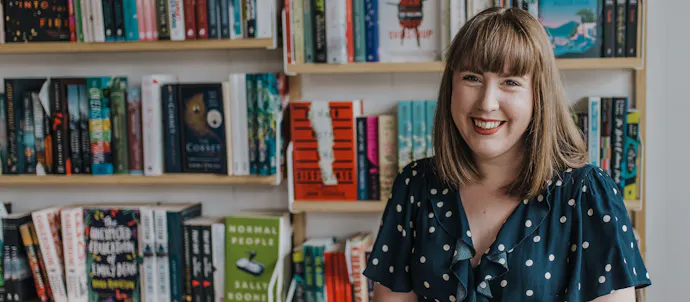
Emily Gale