
Translated by Penny Hueston
Rose tries to appeal to Solange. ‘You and I are alike,’ she says.
‘We might have been alike when we were little, but the truth is that we’re not at all the same.’
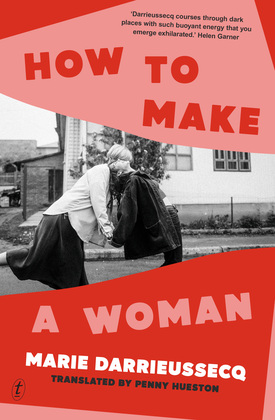
An electrifying double narrative about young women’s lives and desires.
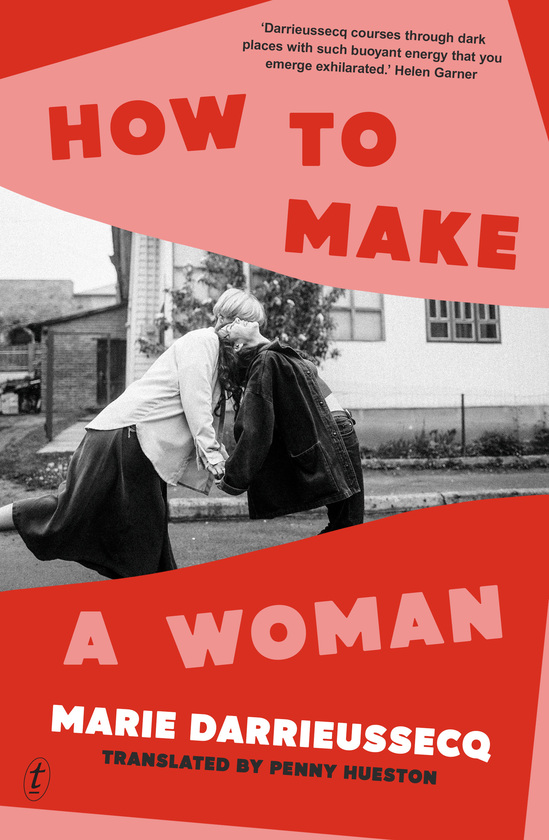
Rose, a psychotherapist, and Solange, an actress, are very different, one diligent and loyal, the other rebellious and self-centred, but they have been best friends forever. In How to Make a Woman, we follow the young women’s experiences of adolescence, love, sex, work and motherhood, as they negotiate their place in the world.
This exuberant portrait of female friendship and desires, of two identities under construction, of ‘what gets done to women’, is also a snapshot of French provincial life in the eighties and nineties. Written with humour and heart, How to Make a Woman is another bold, sparkling novel by a leading voice in French contemporary literature.

andHow to Make a Woman
Marie Darrieussecq courses through dark places with such buoyant energy that you emerge exhilarated.’
‘At once intelligent, insightful, mischievous and tender.’
‘Darrieussecq is one of the most prolific and distinguished living writers in France with a truly impressive body of work.’
‘The internationally celebrated author who illuminates those parts of life other writers cannot or do not want to reach.’
‘There are few writers who may have changed my perception of the world, but Darrieussecq is one of them.’
‘The multigenerational approach orbiting a female friendship might in some ways recall Elena Ferrante’s Neapolitan quartet, yet Darrieussecq’s approach has been neither planned nor chronological, but instead affective and serendipitous. In a recent interview she suggested that these characters occasionally “insist themselves” on her, demanding new chapters of their stories. This sense of infectious intimacy is the novel’s fabric…Susan Sontag once wrote: “To be a woman is to be an actress. Being feminine is a kind of theatre.” In How to Make a Woman Marie Darrieussecq explores this proposition, pulling back the curtain on the charades of femininity with clarity and empathy.’
‘Darrieussecq has a force of clarity, an ability to take herself seriously without the need for self-deprecation. She is always original, always thrilling.’
‘The title of this new novel describes both the element of artifice and of randomness involved in a woman’s existence…Misunderstanding is also central to this novel, whether it concerns sexuality (almost always confused, out of sync, bungled) or the friendship between the two main female characters—they are never as close as when they are apart.’
‘Two things unite Rose and Solange: their friendship, and the conviction that they have a “destiny”…This novel is in the direct line of exploration Marie Darrieussecq is undertaking on the subject of women’s liberation…a subtle deconstruction of countless stereotypes…Without a doubt, these two young women are ultimately victorious because of the depth of their friendship, which nothing will ever put a stop to. It is their refuge.’
‘Through the eyes of these two young women, the destinies of pre- #MeToo women are played out in these pages—when the patriarchy and the arrogance of male chauvinism was the name of the game. Not so very long ago. A passionate feminist, Marie Darrieussecq does not spare us any of Rose and Solange’s torments, which were perhaps in part her own from that time. Her latest novel is a sort of incantation to a female future that is under construction, but still precarious. Rose and Solange are friends who have nothing in common. Except the intense anxiety and wild desire to remain full of life, and safe from the seismic crises of our present times.’
‘Shows us the price women pay to become what is expected of them.’
‘Darrieussecq’s prose is immediate, lively and unforced, a tour de force.’
‘It’s impossible to stop turning these pages…profoundly original.’